
SASL Interpreter
Using a South African Sign Language interpreter.
All people deserve full access to their environment. Equal access for Deaf people is guaranteed by the Constitution of South Africa — one component of which is hiring a qualified, professional SASL interpreter.
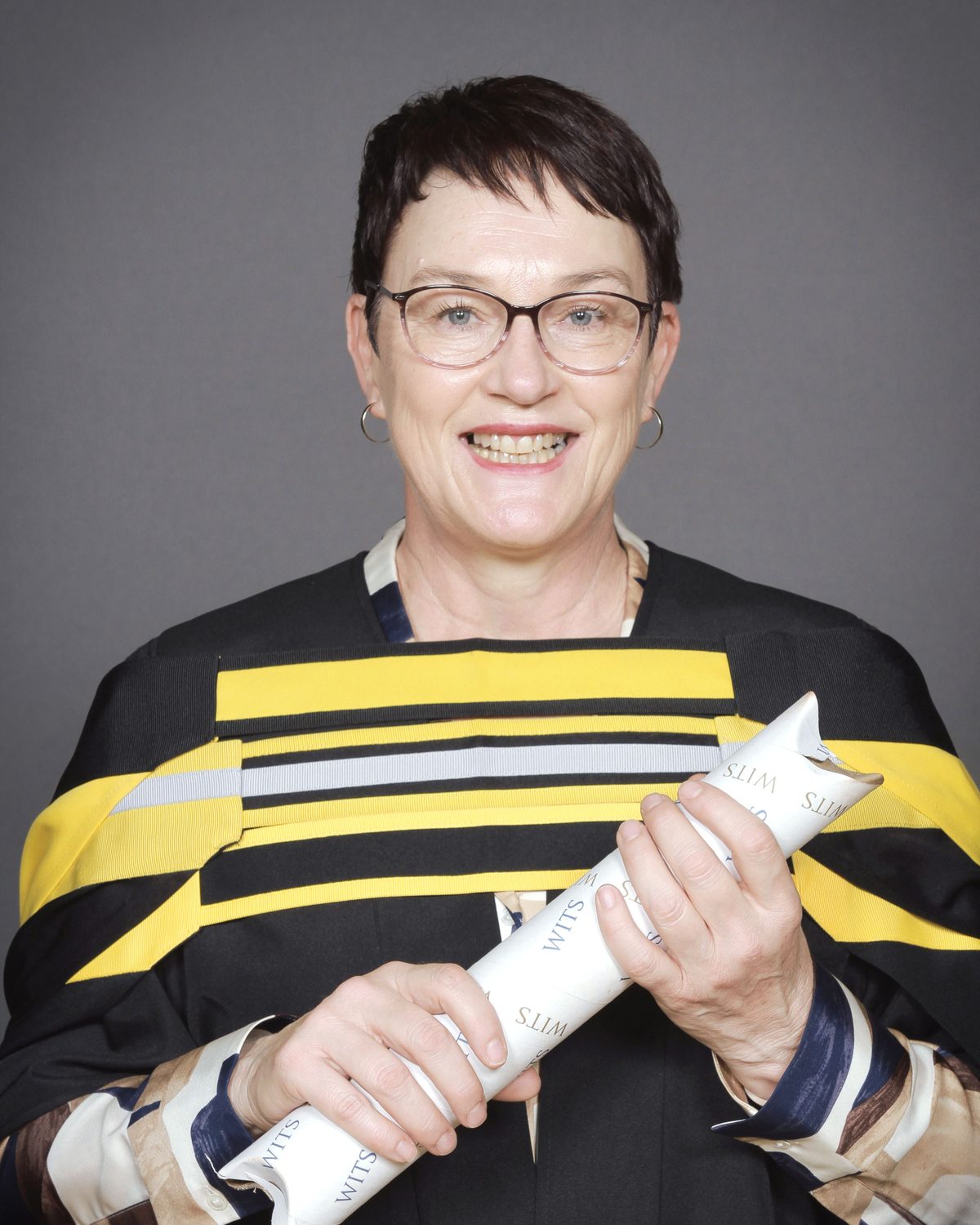
About Thelma Kotzé
Professional South African Sign Language Interpreter
Thelma has been a SASL interpreter for over 3 decades and has interpreted in various settings — from educational to health to legal to media.
She obtained her SATI Accreditation as a simultaneous SASL interpreter in 2004, and her Masters Degree in Translation and Interpreting from the University of the Witwatersrand in 2024.
Thelma is one of the founder members of SASLINC, which has been in operation since 2005. She recently obtained her WFD-WASLI accreditation as International Sign interpreter and enjoys the challenge of working in the IS space.
She has been a trainer of SASL interpreters in a number of courses and has also offered training in other African countries such as Mauritius and Namibia.
View Professional CV (2026)Credentials
A career built on practice, study, and service.
2005
SASLINC Founder Member
Co-founded the centre
2004
SATI Accreditation
Simultaneous SASL Interpreter
2023
WFD-WASLI Accreditation
International Sign Interpreter
2024
Masters Translation & Interpreting
University of the Witwatersrand
What SASL interpreting is…
Facilitation of communication between any of the official languages in South Africa and South African Sign Language.
The primary language used to communicate in South African government and business is spoken English. Deaf people in South Africa use SASL to receive information and to communicate. Without a mediator to decode these conflicting auditory- and visually-based languages, communication is not accessible. The interpreter conveys what is heard in spoken language to the Deaf person in SASL — and vice versa — so each participant can access the information.
What a SASL interpreter is not…
- •An advisor to any of the parties involved.
- •An expert on matters of deafness.
- •Necessarily aware of what Deaf people think and feel.
- •A spokesperson for the Deaf community.
Working with an interpreter
Utilising the SASL interpreter to the maximum.
Clear professional boundaries
Interpreters are trained to bridge communication using SASL, spoken languages, cultural mediation and accessibility knowledge. They follow a strict code of ethics (approved by SATI and DeafSA), remain neutral, and keep all interpreted information confidential.
Preparation matters
There is no such thing as too much information. Summaries, key vocabulary, videos, and special event details give interpreters the background to interpret new facts and concepts accurately.
The need to rest
SASL interpreting is physically, psychologically and mentally draining. The ideal uninterrupted time is 30–40 minutes — after which a second interpreter takes over, or a 5-minute break is taken.
Accessing the access
SASL interpreting is one method of accessibility — but there are many other considerations.
Deaf people rely on their vision to communicate and learn. Whether the Deaf person is watching an interpreter, an experiment, a video, written examples, a demonstration, or information on a handout — all messages are gathered visually.
One message at a time
If you expect the Deaf person to understand more than one message at a time, missed information is unavoidable. Use sequenced rather than simultaneous actions.
Speak one at a time
During discussions, clear turn-taking gives the Deaf person (and the interpreter) a clear understanding of the content — and an opportunity to participate.
Closed captioning during videos
Captioning allows the Deaf person to follow the action of the video while still being able to read the words being spoken.
Lag time
SASL interpreting is not instant — interpreters need 3–5 seconds of processing time before producing each thought or concept.
Line-of-sight & lighting
The Deaf person should be able to clearly see the interpreter, speaker, slides and other participants — with adequate lighting on the interpreter.
Every consumer is different
Individual needs must be evaluated before deciding what creates an accessible environment for each Deaf person.